
Rethinking Migration, Recognition and National Development in Nigeria
By Aihawu Victor
Director, Platform for Cooperation on Mixed Migration (PCMM)
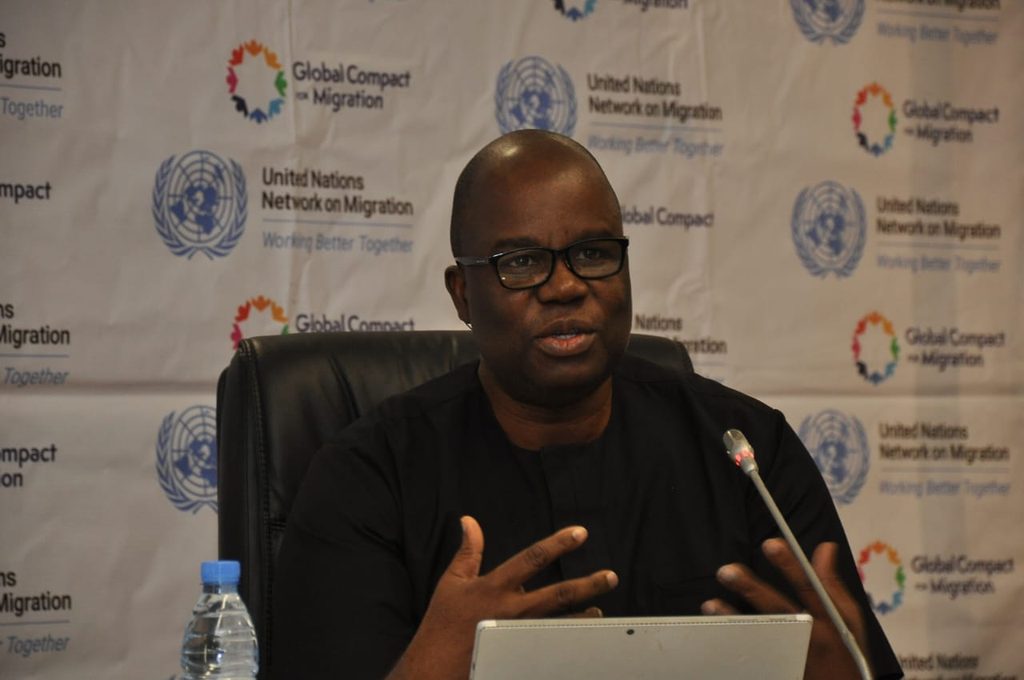
When governments speak about diaspora engagement, attention naturally turns to citizens living beyond their national borders. Across the world, countries have established diaspora offices, commissions and institutions to maintain relationships with their citizens abroad, attract investments, encourage knowledge transfer, mobilise professional expertise and strengthen their contributions to national development.
Nigeria is no exception. We celebrate the achievements of Nigerians abroad, recognise their remittances, encourage their investments and seek their participation in building a more prosperous nation. These efforts are important because citizens abroad remain valuable stakeholders in their country’s development.
But there is another diaspora we rarely discuss: the diaspora within.
They are the people who left their countries of origin and chose Nigeria as their destination. Some arrived as entrepreneurs, traders, professionals, students or investors. Others came in search of opportunities, found love, married Nigerian men and women, raised families and gradually became part of the communities they now call home.
Across Nigeria, these individuals establish businesses, create employment, pay taxes, introduce new skills and contribute to economic activities. They enrich our communities through their cuisines, languages, traditions, music and cultural expressions. Some have lived among us for decades, with children who have grown up knowing Nigeria as home.
Yet, despite these contributions, we often identify them simply as foreigners or migrants.
Strictly speaking, these individuals belong to the diasporas of their respective countries of origin. A Ghanaian living in Nigeria is part of the Ghanaian diaspora, just as a Nigerian living in Ghana belongs to the Nigerian diaspora. However, when viewed from Nigeria’s development perspective, these communities represent something we have not sufficiently acknowledged.
They are somebody else’s diaspora, but they are also stakeholders in Nigeria’s development. For the purpose of this conversation, I call them the diaspora within.
Rethinking Our Approach to Diaspora Engagement
If Nigeria considers its citizens abroad important partners in national development, should we not also recognise the contributions of foreign nationals who have chosen to live, work and invest within our borders?
When Nigerians establish successful businesses in the United Kingdom, United States, Canada or other countries, we celebrate their achievements. We expect their host countries to respect their rights, recognise their contributions and provide an environment where they can thrive.
Should we not demonstrate the same commitment to those who have made Nigeria their home?
Consider a Nigerian entrepreneur in Manchester who establishes a business and employs British residents. Now consider a Ghanaian entrepreneur in Abuja who establishes a business and employs Nigerians. Both contribute to the economies of their host countries.
Their nationalities differ, but the economic value of their contributions deserves recognition.
This is not an argument against prioritising Nigerian citizens or questioning the responsibilities of institutions established to engage Nigerians abroad. Rather, it is a call for a complementary approach that recognises resident migrants as contributors to national development.
After all, national prosperity is not determined exclusively by the nationality of those who contribute to it.
The Economic Value of Belonging
Countries increasingly compete to attract investments, entrepreneurs, skilled professionals and innovative minds. Nigeria should not only be concerned about encouraging its citizens abroad to return or invest at home; it should also be interested in attracting and retaining productive individuals from other countries.
A foreign entrepreneur who establishes a successful business in Nigeria may encourage others to explore similar opportunities. A professional who transfers expertise to Nigerian institutions contributes to human capital development. A student who studies in Nigeria and returns home with positive experiences may become a lifelong advocate for our country.
These relationships can strengthen international trade, tourism, cultural diplomacy and economic cooperation.
However, attracting people is only one part of the equation. Creating an environment where they feel respected, secure and able to contribute is equally important.
A country does not become attractive to the world merely by inviting people to visit. It becomes attractive when those who come find reasons to stay, invest, contribute and belong.
Recognition must therefore extend beyond ceremonial appreciation. It should include fair treatment, responsible migration governance, access to reliable information and opportunities for lawful participation in economic and community life.
Nigeria has a rich history of hospitality, commerce and cultural interaction. We should build on these strengths while addressing the practical challenges that can prevent migrants from reaching their full potential.
From Recognition to National Policy
If the contributions of Nigerians abroad are sufficiently important to justify dedicated government engagement, then the contributions of foreign nationals residing in Nigeria also deserve deliberate attention within our national development framework.
This does not necessarily require another government agency. It requires stronger cooperation among institutions responsible for migration, investment, trade, labour, culture and tourism.
We should begin asking important questions.
How much do migrant-owned businesses contribute to our economy? How many Nigerians are employed by these businesses? Are we adequately documenting the skills, investments and professional networks that migrants bring? Do we recognise foreign nationals who have made exceptional contributions to Nigerian communities?
Most importantly, are we creating opportunities for migrant communities to participate meaningfully in conversations about the development of the country they now call home?
Without understanding these contributions, we risk overlooking valuable opportunities for economic growth and international cooperation.
Cultural Hangout Festival: Giving Recognition a Platform
This thinking is central to the Cultural Hangout Festival (CHF), celebrated in Abuja in commemoration of the United Nations International Migrants Day.
The festival is built on the conviction that migration should not be discussed exclusively through the challenges of irregular movement, border restrictions, deportation and displacement.
Migration is also a story of enterprise, resilience, family, cultural exchange and shared prosperity.
Through music, food, fashion, art, storytelling and cultural dialogue, CHF provides a platform for migrant communities to showcase their heritage and celebrate their contributions to Nigeria.
But the ambition goes beyond entertainment.
We want to encourage a national culture of recognition, where migrants are seen not merely as temporary residents or foreign nationals, but as people whose contributions can strengthen our communities and economy.
We want successful migrant entrepreneurs, educators, professionals, artists and community leaders to be acknowledged for the value they bring to Nigeria.
We also want Nigerians to appreciate that welcoming people from other countries can strengthen our international relationships and create opportunities for future generations.
The Cultural Hangout Festival is therefore both a celebration and an invitation to rethink how we understand migration, belonging and national development.
The Diaspora Is Not Always Across the Ocean
As Nigeria continues to strengthen its engagement with citizens abroad, we must not overlook those who have crossed borders in the opposite direction and chosen to build their lives among us.
They may carry different passports, speak different languages and celebrate different traditions, but many have become part of our economic and social fabric.
Some are our neighbours. Some are our employers or employees. Some teach our children, operate businesses in our communities or have become members of our families.
Their contributions deserve visibility, appreciation and respect.
We cannot consistently demand recognition for Nigerians contributing to other countries while overlooking foreign nationals contributing to our own.
If diaspora engagement is ultimately about national development, then our understanding of who contributes to that development must be broad enough to recognise both the Nigerian diaspora abroad and the diaspora within.
Let us celebrate Nigerians who carry our identity across the world. But let us equally honour those who have brought their identities, talents and aspirations to Nigeria.
Because a nation’s development is strengthened not only by those who leave and remember home but also by those who arrive and choose to make it their home.
The diaspora within deserves to be seen, heard and celebrated.
That is the conversation we seek to advance through the Cultural Hangout Festival.
This is a topic we really need to explore. The situation of migrants living and working in Nigeria, and other nations diasporas in nigeria are subsector of our population we need to study and include in migration governance framework.
You are right boss, its high time we include them in our migration governance framework.
Cheers